

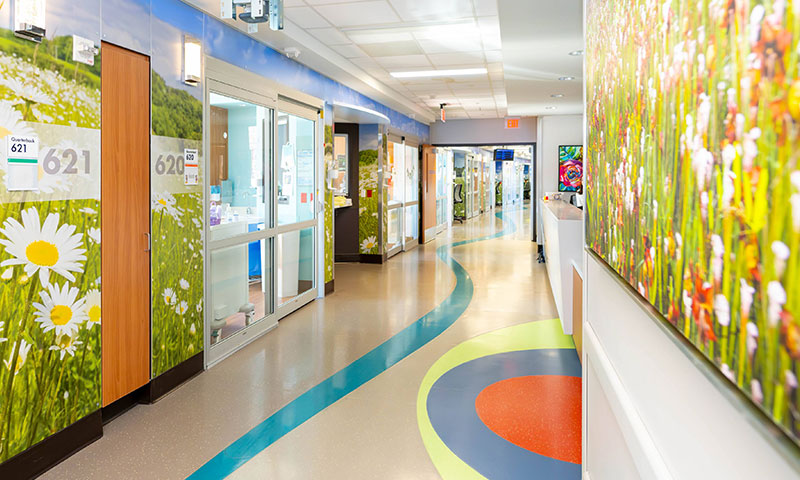
In January 2025, Children’s of Alabama announced the expansion of its Neonatal Intensive Care Unit (NICU). The NICU is a Level IV unit now with an additional six beds totaling 54 private rooms for neonates and infants. The unit houses four extracorporeal membrane oxygenation (ECMO) rooms, and it is the only unit in the state that provides dialysis for premature infants in addition to ECMO therapy.
In recent years, Children’s has experienced record-breaking patient volumes and an increased need for inpatient space to treat infants. The complexity of the care Children’s provides requires the largest team at the hospital: 250 staff members caring for preterm and term neonates with a wide range of conditions. More than 400 babies each year rely on the care of the Children’s of Alabama NICU.
“We care for patients from birth to 2 years of age, ranging from critical to our complex chronic population. This addition allows our team to continue to provide family-centered care in private rooms for our smallest patients,” NICU director Jill Jones Smith said. “Our NICU regularly has a waitlist of surgical neonates from referring hospitals that require our services. These extra bassinets help alleviate wait times and help us get to those patients and families even faster.”
The expanded NICU houses state-of-the-art facilities such as an additional dedicated nurse station, medication and milk storage room, and equipment room. The project also includes specialty equipment, technology, and furniture, making families’ time at Children’s more comfortable. The Children’s of Alabama NICU continues to serve as a lifeline for Alabama’s youngest patients.
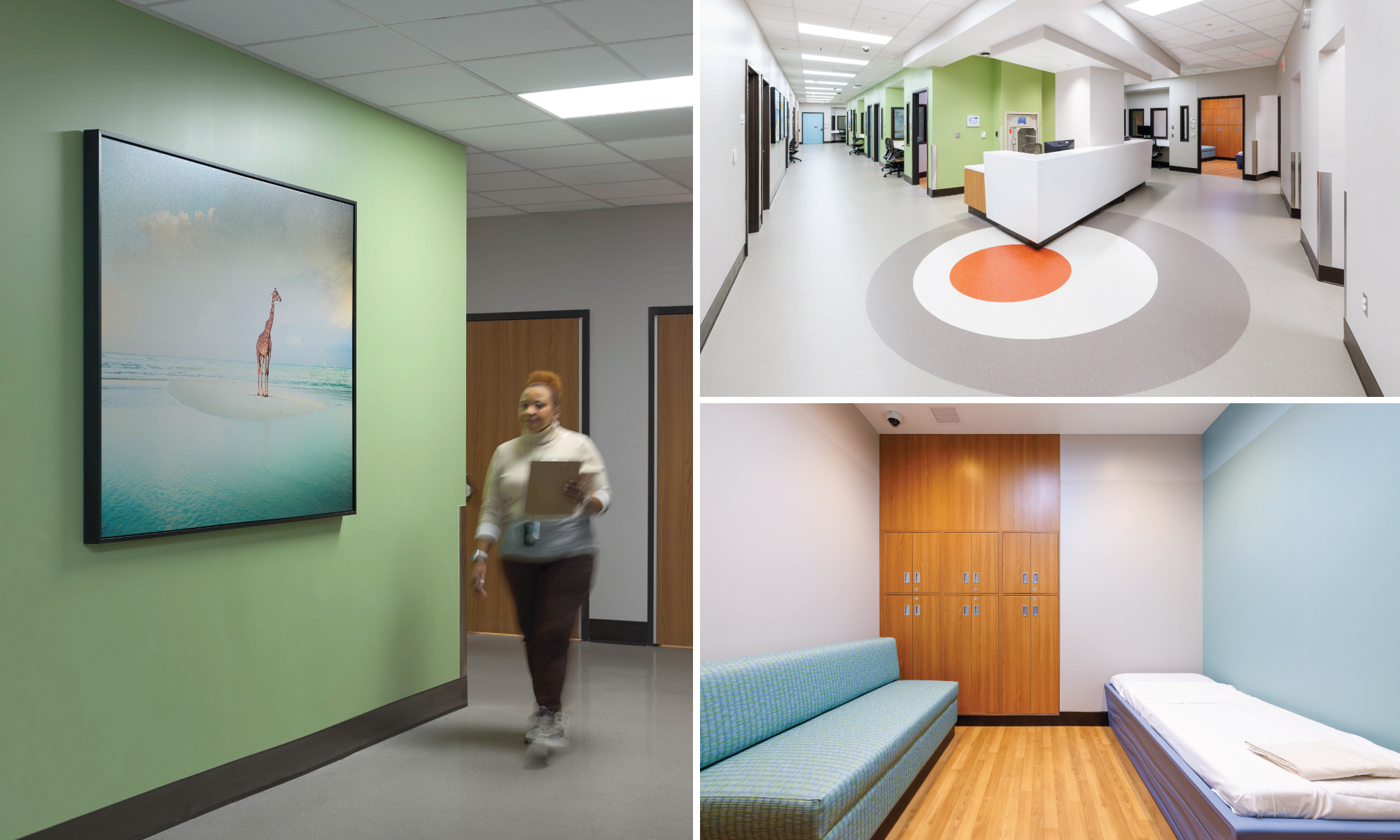
In February 2025, Children’s of Alabama announced the expansion of its Inpatient Behavioral Health Services. The center opened 11 additional beds to help meet the community’s increasing need for child and adolescent mental health care.
“With this addition, we are able to meet the needs of patients who can actively participate in the therapy-focused milieu,” said Bonnie Moore, Director of Nursing at the Behavioral Health Inpatient Center. “This unit ensures a supportive environment for these patients to begin to heal, grow, and develop coping strategies. By providing this space, we empower these patients to understand their emotions, develop coping skills, and set a foundation for lifelong mental and emotional health.”
This new 11-bed unit focuses on evidence-based dialectical behavior therapy (DBT), informed skills, and behavioral interventions primarily for patients 12 to 18 years of age. Patient and family involvement is an important aspect of the program. The unit is designed to support the patient’s ability to implement and practice skills throughout their admission, with ongoing coaching from therapists, nurses, and support staff.
The primary goals of the expansion were to decrease wait times and increase capacity for inpatient care. The impact is already clear. In 2025, the average time to an available bed decreased by 35% compared to 2024, when 43% of behavioral health patients who presented in the Children’s Emergency Department (ED) waited more than six hours for an available bed in the Children’s Inpatient Unit. The improvement happened despite a 7% increase in behavioral health-related ED visits and a 45% increase in behavioral health admissions.
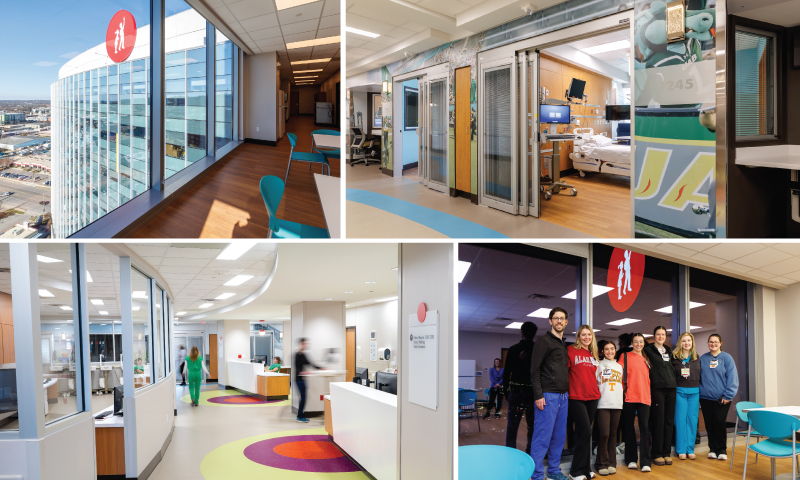
Construction on a new 50-bed critical care unit at Children’s of Alabama wrapped up in mid-November—two months ahead of schedule. Hospital leaders expect to open the new unit by late February 2026.
The project, which began in 2024, will relocate and expand the hospital’s Pediatric Intensive Care Unit (PICU) and Special Care Unit (SCU) into a previously shelled space on the 12th floor of the Benjamin Russell building.
Children’s began the project in response to the increasing demand for pediatric care, particularly for those with higher acuity needs. “As the only freestanding pediatric organization in the state, Children’s recognized the growing challenge of ensuring we can offer our specialized services to every child in need, regardless of the complexity of their condition,” said Jeannie Etheridge, division director of Inpatient Nursing Services at Children’s. “To address these challenges, it became clear that a newly designed Pediatric Intensive Care Unit was necessary to maintain our high standard of care while expanding our PICU capacity.”
The project has been a collaborative and multidisciplinary effort, involving a wide range of teams from across the organization, including nursing leaders and bedside staff from the SCU and PICU, physician leaders, respiratory care specialists, integrative care experts, pharmacists, IT professionals, facilities management, and other service partners. Leadership teams have engaged in extensive research to guide the project’s direction.
“The 12th floor project reflects our unwavering commitment to meeting the growing demand for specialized pediatric care while maintaining the highest standards of patient care and safety,” Etheridge said. “It is a direct response to the challenges posed by an influx of higher acuity patients and a necessary step in our mission to serve every child who comes through our doors. What began as a need to expand our capacity has now become a vision for the future—one that embraces collaboration, innovation, and a culture of wellness. Together, we are building a future where Children’s of Alabama continues to lead the way in pediatric care, ensuring that we remain a trusted resource for children and families across the state and beyond.”
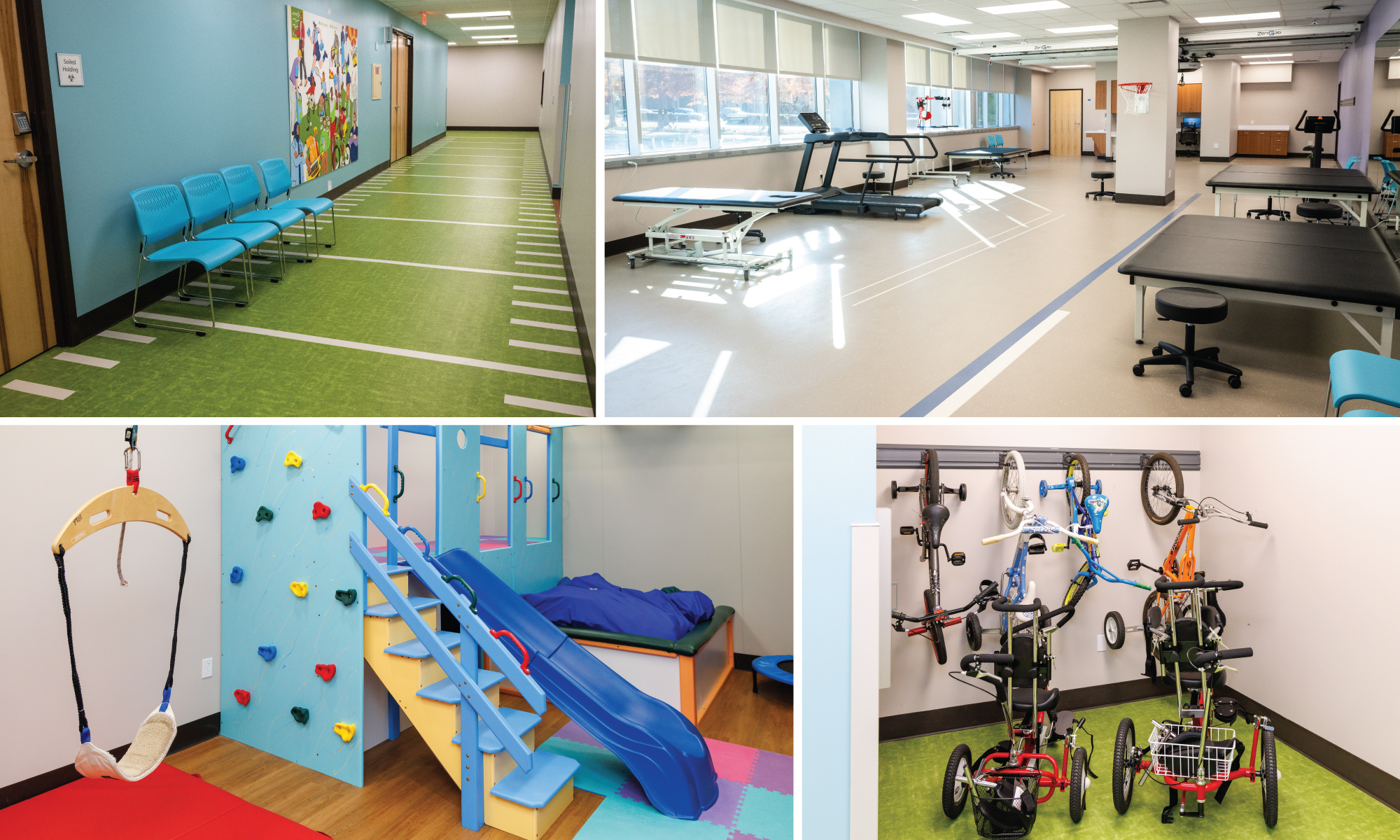
In 2025, Children’s of Alabama paved the way for the Children’s on 3rd Outpatient Center, previously located in downtown Birmingham, to move to a newly renovated space at the Children’s at Patriot Park Outpatient Center facility in Homewood. This transition aligned with the end of the current lease and represents a significant step forward in expanding and modernizing outpatient services. The clinic, which opened in January 2026, offers physical therapy, occupational therapy, speech therapy, and audiology. The new facility, designed to improve both patient experience and service delivery, includes more therapy rooms, along with dedicated sensory spaces and expanded treatment areas

In January 2025, Children’s of Alabama, for the first time, treated a patient with Duchenne muscular dystrophy (DMD) using a new gene therapy offered by only a few academic hospital facilities in the nation. The milestone followed a lengthy approval process and marked a new opportunity for patient success and scientific progress. Though not a cure, the treatment represents the hope of a longer life for these patients. For researchers, it will contribute to greater learning about the potential of this new treatment.
DMD is the most common form of muscular dystrophy, affecting one in every 5,000 males born in the United States. Patients experience progressive muscle degeneration, starting with proximal muscles and expanding to the limbs over time. They have trouble with many physical activities such as jumping, running, and walking, and they lose the ability to walk over time. The disease is fatal, and most patients don’t live past their late 20s. DMD has no cure; treatment focuses on extending the patient’s life by slowing down its progression.
Since the 1990s, physicians have prolonged the lives of patients with DMD using corticosteroids, whose anti-inflammatory properties can slow down the disease’s progression by about three years. Gene therapy, however, represents a new treatment, aimed at restoring the function of the causative gene, dystrophin. The U.S. Food and Drug Administration originally approved it in 2023 for use in patients ages 4 to 5. In 2024, the agency extended that approval to all patients 4 years and older.
In this treatment, the transgene (a micro-dystrophin synthetic gene) is packaged within a viral capsid—a virus not intended to harm the patient that can hold the genetic material. In essence, physicians are “giving back the missing genetic information to the muscle tissue,” Children’s neurologist Michael Lopez, M.D., Ph.D., said. Unlike any other option, he noted, gene therapy treats the root cause of DMD.
For more details on how the therapy helps patients with DMD, click here.
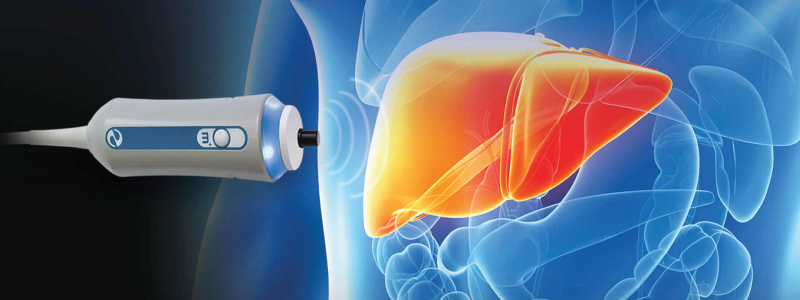
With obesity in children steadily rising, more young patients are coming to Children’s of Alabama with a form of fatty liver disease that can greatly imperil their health. But determining the progression of liver disease can be a thorny process. To smooth that path, Children’s recently invested in an increasingly popular technology called FibroScan, helping University of Alabama at Birmingham (UAB) pediatric physicians to deftly and comprehensively manage children’s care.
Using a technique known as transient elastography, FibroScan was the first FDA-approved device of its kind and is considered an aid to managing liver disease. Quick, noninvasive, and painless, it uses an enhanced form of ultrasound to send vibrations into the liver to measure its stiffness, which typically indicates fibrosis or scarring. “The more quickly the wave passes through the liver, the more stiff the liver is,” Children’s transplant hepatologist David Willcutts, M.D., explained.
By assessing the severity of scarring—and the potential for cirrhosis—FibroScan can help diagnose or monitor the progression of various liver conditions. These range from less-common cystic fibrosis-associated liver disease to more-prevalent autoimmune liver diseases and metabolic dysfunction-associated steatotic liver disease (MASLD). The latter—which can also result from genetic predisposition—essentially makes the liver unable to process the high amounts of extra calories a person is consuming, spurring inflammation.
About one-third of the patients in Children’s Hepatology Clinic, which serves about 500 ongoing patients each year, have suspected or confirmed fatty liver disease. “We will be using this for almost every patient with confirmed fatty liver disease,” Willcutts said.
To learn more about this technology, click here.
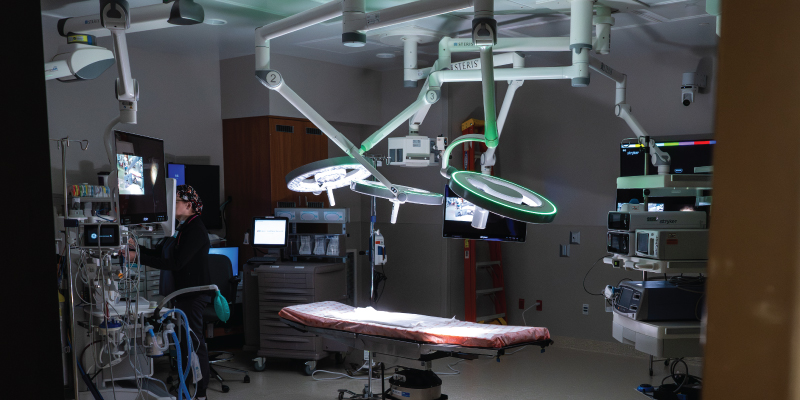
In late 2025, Children’s of Alabama finished construction on a new Operating Room (OR) that is now in use. Surgeons began using Operating Room #7 January 5, 2026, and have since performed procedures in the following services: ENT, general surgery, GI, gynecology, oral, neurosurgery, orthopedic, and urology. The new OR provides Children’s with additional space for an ever-growing patient volume. It has been a great solution for urgent and emergent procedures and has helped to eliminate wait times for those patients.
EPIC Welcome went live at Children’s beginning in April 2025, and the last kiosks and tablets were deployed in December. Welcome offers patients self-service options when they arrive at clinics or the hospital. It supplements staff-driven registration and check-in workflows so front desk staff can focus on patients who most need help. With Welcome, patients and proxies can complete a variety of tasks, such as reviewing registration information, completing patient-entered questionnaires, and making payments on account balances. At pediatric practice locations, patients can check in via Kiosk, Check-in Tablet, or through MyChart using Hello Patient. At the main hospital, patients can complete pre-check-in and questionnaires via MyChart & eCheck-in for All (non-MyChart users) or use the questionnaire tablets at the clinic locations.
In September, the Children’s imaging team began using new EOS equipment. This technology provides low-dose 3D digital images of a patient's entire musculoskeletal system in a natural, weight-bearing standing position. In children, this is primarily used to identify and track scoliosis. The new equipment provides 50% less radiation than Children’s previous EOS, has significantly better image quality, can hold larger patients, and has a radiolucent chair to allow seated exams when needed. Children’s performs 200 EOS exams per month.
In September, the Children’s imaging team began using new EOS equipment. This technology provides low-dose 3D digital images of a patient's entire musculoskeletal system in a natural, weight-bearing standing position. In children, this is primarily used to identify and track scoliosis. The new equipment provides 50% less radiation than Children’s previous EOS, has significantly better image quality, can hold larger patients, and has a radiolucent chair to allow seated exams when needed. Children’s performs 200 EOS exams per month.